
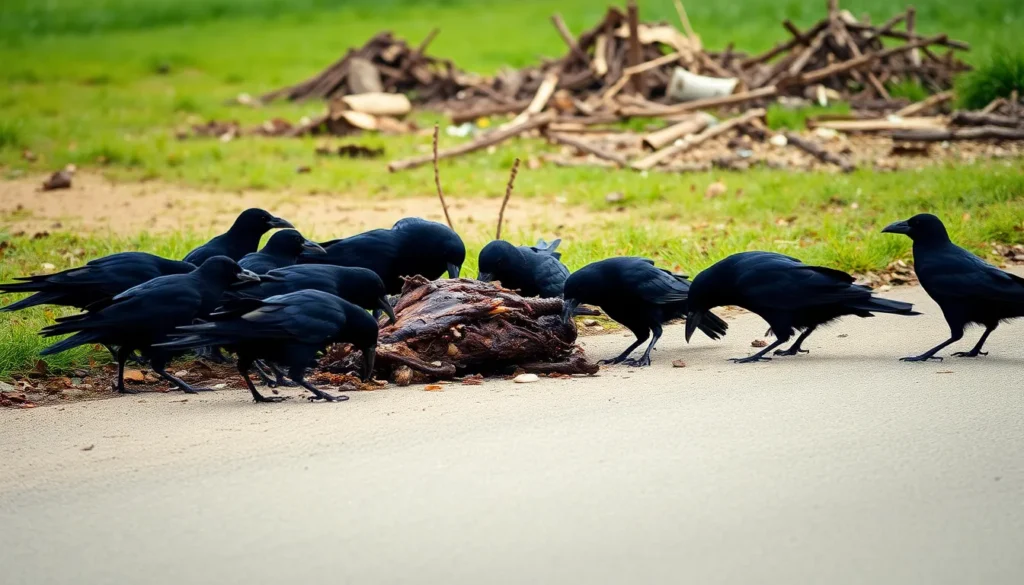
Crows are often seen as the misunderstood mischief-makers of the bird world. With their sleek black feathers and sharp beaks, they strut around like they own the place. But what’s really going on in those clever little heads? One burning question lingers: do crows eat dead animals? Spoiler alert: they do, and they’re not shy about it!
Overview of Crows’ Diet
Crows adapt well to various food sources, showcasing their opportunistic feeding behavior. These birds consume a mix of items, including fruits, grains, and meat.
General Feeding Habits
Crows primarily forage for food during the daytime. They demonstrate strong problem-solving skills while locating meals. These birds are attracted to open areas where food sources are abundant. They often search through garbage, gardens, and fields. Pairs and groups can work together to increase foraging efficiency. Observations indicate crows eat insects, small animals, and carrion. Their flexible diet helps them thrive in diverse environments.
Significance of Scavenging
Scavenging plays a crucial role in a crow’s diet. This behavior allows crows to access nutrient-rich food while helping to maintain ecosystem balance. By consuming dead animals, they contribute to the decomposition process. Scavengers like crows help limit the spread of disease by cleaning up carcasses. Their scavenging habits improve soil health by returning nutrients to the ground. Studies highlight crows’ importance in food webs as efficient recyclers of organic matter.
Do Crows Eat Dead Animals?
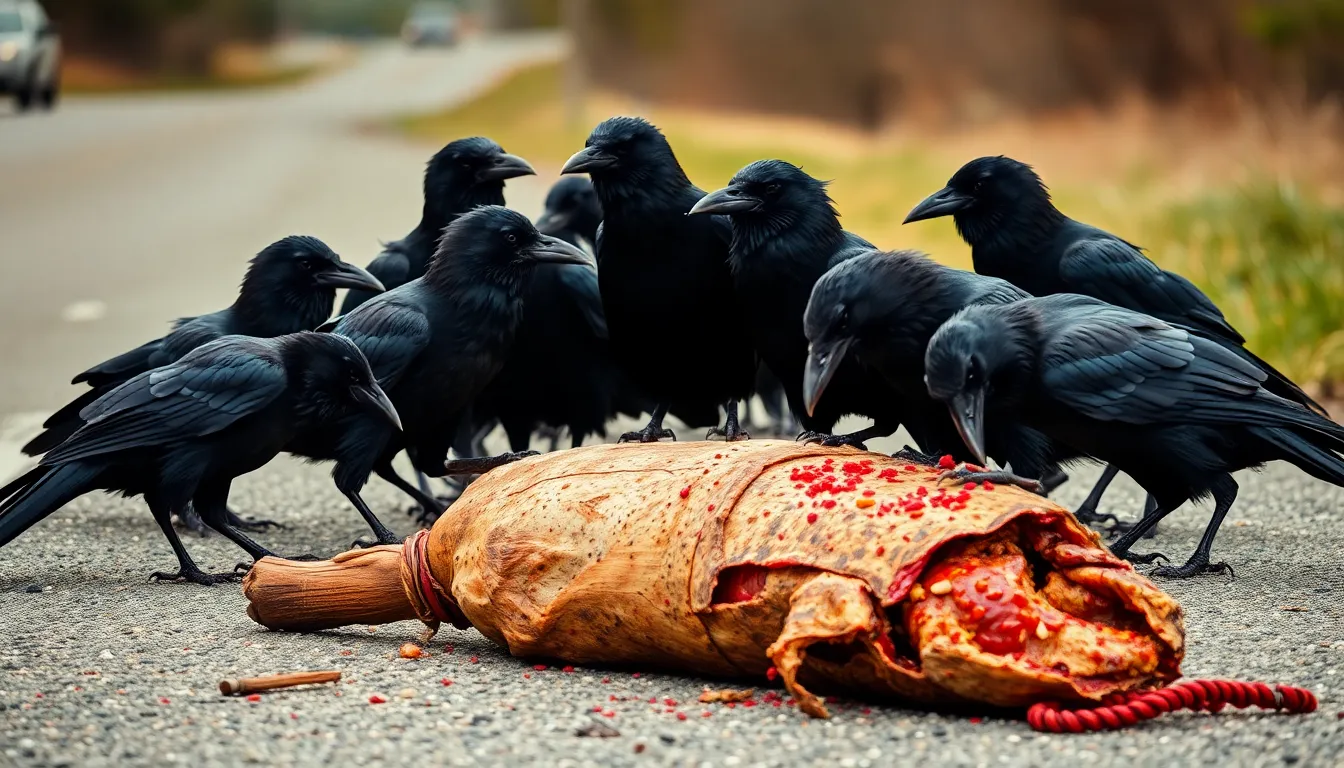
Crows actively consume dead animals, showcasing their role as scavengers in the ecosystem. Their diet reflects adaptability and opportunism, making them crucial participants in food webs.
Evidence and Observations
Numerous studies demonstrate crows feeding on various dead animals. Observers frequently report crows congregating around roadkill, indicating their scavenging behavior. Behavioral evidence confirms that they peck at carcasses and consume carcass parts. These birds display remarkable intelligence by using tools to access harder-to-reach areas of dead animals. Research shows that crows sometimes call other crows to assist in feeding, highlighting their social nature and cooperative feeding strategies.
Geographic Variations in Feeding Behavior
Crows exhibit different scavenging behaviors based on geographic locations. In urban settings, crowds search dumpsters and garbage for dead animals and leftover food. Rural crows, however, often find carcasses in fields or near livestock. Regional diet preferences influence their feeding habits significantly. In resource-rich environments, crows may focus more on fruits or grains while still scavenging on carcasses as needed. Geographic factors, including weather and habitat, also dictate access to dead animals, showcasing the flexibility of crows’ feeding strategies.
Nutritional Benefits for Crows
Dead animals play a crucial role in crows’ diets, providing essential nutrients. Scavenging allows them to access high-protein food, which boosts their energy levels. Carcasses serve as a source of fats, vitamins, and minerals important for overall health. Crows can consume decaying meat, taking advantage of these readily available food sources. Through this behavior, they reduce competition for other food types by focusing on what might be overlooked by other species.
Crows’ scavenging habits directly impact their health. The intake of diverse nutrients from carcasses strengthens their immune systems. Eating dead animals also enhances their foraging efficiency, allowing them to utilize resources in various environments. Most importantly, accessing nutrient-rich food helps maintain their reproductive health and supports the growth of juvenile crows. Adapting to available food sources ensures their survival in changing habitats and fluctuating food conditions.
Interaction with Ecosystems
Crows play a vital role in maintaining ecosystem balance through their scavenging habits. Adapting to available resources, they consume dead animals, aiding in nutrient cycling.
Contribution to Decomposition
Crows contribute significantly to decomposition by breaking down carcasses. As they feed on decaying matter, they facilitate nutrient release into the soil. This process enriches the ecosystem, promoting healthier plant growth. Without crows, the decomposition rate would slow, affecting nutrient availability for other organisms. Their ability to access various types of carcasses allows them to aid in efficient decomposition and mitigate the spread of pathogens. The presence of crows in an environment directly correlates with improved soil health.
Relationships with Other Scavengers
Crows interact with various scavengers, forming a crucial part of the scavenging network. Their opportunistic feeding behavior often leads them to compete with vultures, raccoons, and foxes for carcasses. Familiarity with other scavengers allows crows to adapt their feeding strategies; they may signal to other scavengers or wait for them to tear into larger carcasses first. In urban settings, crows frequently share resources with other species by foraging near dumpsters. Their social dynamics with other scavengers improve feeding efficiency and ensure access to nutrient-rich food sources.
Crows play an essential role in the ecosystem through their scavenging habits. By consuming dead animals, they not only access vital nutrients but also contribute to the natural process of decomposition. This behavior supports healthier soil and promotes plant growth, showcasing their importance as recyclers within food webs. Their adaptability in various environments highlights their intelligence and resourcefulness. As they navigate urban and rural landscapes, crows continue to demonstrate their value in maintaining ecological balance, making them fascinating and crucial members of the animal kingdom.


